

If your air conditioner is running but your home still feels warm, low refrigerant could be one possible cause. You may notice warm air coming from the vents, ice forming around the evaporator coil, or strange hissing and bubbling sounds near the system.
Refrigerant plays a central role in the cooling cycle. When the level drops, the AC may have trouble removing heat from your home. A refrigerant leak is often the reason, since refrigerant does not normally get used up during regular operation.
Knowing what to look for can help you spot a potential problem early. Some signs are easy to notice, while others require a technician and the right tools to confirm.
Key Takeaways
- Inadequate cooling can be a sign that your AC has lost refrigerant.
- Ice on the evaporator coil may point to low refrigerant pressure.
- Hissing or bubbling sounds can indicate a refrigerant leak.
- Pressure readings can help confirm whether the system is operating within the manufacturer’s specified range.
- Frequent cycling can happen when an AC is struggling to reach the temperature set on the thermostat.
- A refrigerant leak should be repaired before the system is recharged.
Key Symptoms of Low Refrigerant in Your AC
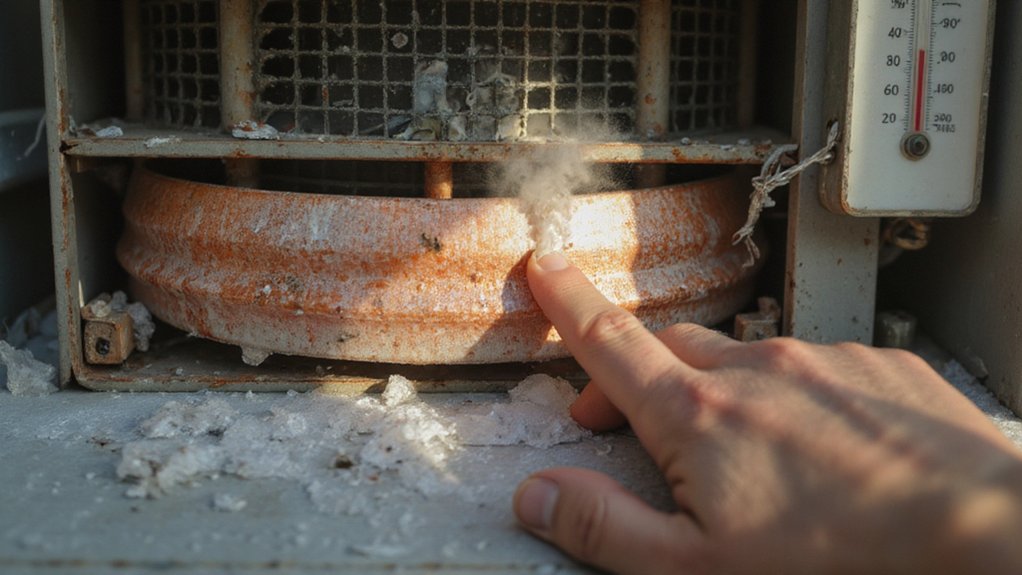
Have you noticed that your air conditioner is running longer than usual but your home still isn’t getting cool? Low refrigerant may be one possible explanation.
One common sign is inadequate cooling. The air coming from the vents may feel less cold than usual, even though the thermostat is set to a comfortable temperature. Your AC may also take much longer to cool the room.
Ice buildup around the evaporator coil is another sign to watch for. When refrigerant is low, the pressure and temperature within the cooling system can change. Under certain conditions, moisture can freeze around the coil.
You may also hear unusual sounds. Hissing or bubbling near the refrigerant lines can point to a leak. Small leaks aren’t always easy to see, so sound can sometimes be one of the first clues that something isn’t right.
A pressure reading can provide more information, but it needs to be compared with the manufacturer’s specifications. A low reading alone does not tell the whole story, since pressure can vary based on several conditions.
If you notice several of these signs at the same time, having the system checked can help prevent the issue from becoming more serious.
How Low Refrigerant Affects AC Performance
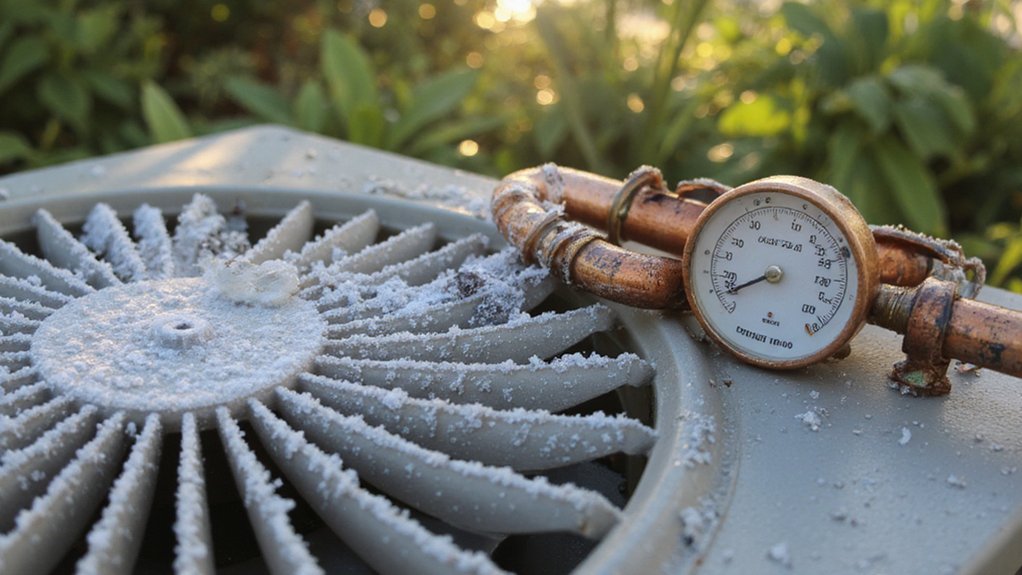
When an air conditioner does not have enough refrigerant, it may struggle to remove heat from the air inside your home. That can affect both comfort and how long the system needs to run.
You may notice that the AC runs for longer periods without reaching the thermostat setting. In some situations, the system can also use more electricity because it is working harder for longer.
Low refrigerant can also contribute to ice forming on the evaporator coil. Once ice builds up, airflow and cooling can become even worse.
Reduced Cooling Efficiency
Low refrigerant can make it harder for your air conditioner to cool your home properly. The system depends on the correct amount of refrigerant to absorb heat from indoor air and move that heat outside.
When the refrigerant level is too low, the cooling cycle may not work as intended. Your AC might run for a long time without bringing the room down to the temperature set on the thermostat.
Temperature changes can become more noticeable, especially during hot weather. You may find that some rooms stay warm even though the air conditioner is running.
Ice on the evaporator coil can make the situation worse. As the coil freezes, the system may have even more difficulty moving air and cooling the space.
If your AC is showing these symptoms, it is worth having the system inspected. The goal is not simply to add refrigerant. The cause of the low level needs to be found and addressed.
Increased Energy Consumption
A struggling air conditioner can also affect your energy use. When the system cannot cool the home as expected, it may run for longer periods in an attempt to reach the thermostat setting.
That extra runtime can contribute to higher electricity bills. You may notice the difference most during periods of heavy AC use, especially when outdoor temperatures are high.
The thermostat setting may not explain the whole issue. If you keep lowering the temperature but the home still feels warm, the problem may be somewhere in the cooling system.
Low refrigerant is one possible cause, but it is not the only one. Dirty filters, airflow restrictions, electrical problems, and other AC faults can create similar symptoms.
Checking the system can help determine what is actually causing the problem instead of simply assuming that refrigerant is low.
Why Is My AC Running but Not Cooling Down?
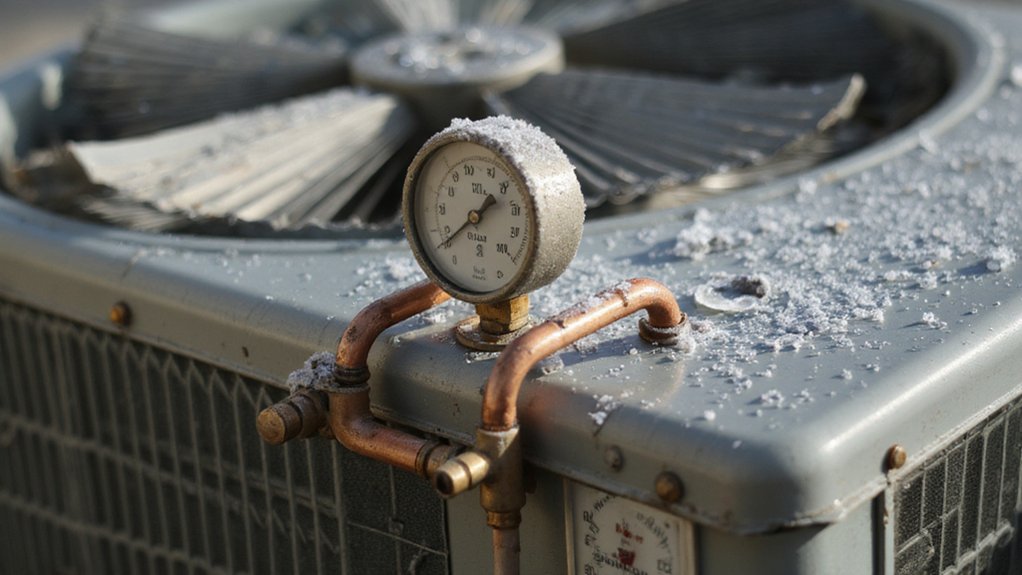
An air conditioner that runs without properly cooling the home can have several possible problems. Low refrigerant is one of them, but it is worth checking the simpler causes too.
A dirty air filter can restrict airflow and make the system less effective. If the filter is clogged, the AC may have trouble moving enough air through the system.
Insufficient Refrigerant Levels
When your air conditioner runs but doesn’t cool the home properly, insufficient refrigerant may be part of the problem.
A refrigerant leak is a common reason for a low level. Leaks can develop around connections, fittings, coils, or other parts of the refrigerant circuit. Wear, damage, and other system issues can contribute to leaks over time.
When refrigerant is too low, the AC may not absorb heat as it should. You may notice warm air from the vents, longer cooling cycles, or ice around the evaporator coil.
Hissing sounds can also be a clue. A small leak may not be visible, so a technician may need specialized equipment to locate it.
If you suspect a refrigerant problem, the system should be inspected rather than repeatedly adding refrigerant. Finding and repairing the leak is an important part of addressing the issue.
Dirty Air Filters
Low refrigerant isn’t the only reason an AC might struggle to cool your home.
A dirty air filter can restrict airflow and place extra strain on the system. When the filter becomes clogged with dust and debris, less air can move through the equipment.
You may notice weaker airflow from the vents or warmer air in some rooms. The AC may also run longer while trying to maintain the thermostat setting.
Check your air filter regularly and replace it when needed. The right replacement schedule depends on the type of filter, household conditions, and how often the system runs. Many homeowners check their filters every one to three months.
A clean filter supports good airflow and can help the system operate as intended. It also gives you a simple place to start when an AC suddenly seems less effective.
Common Causes of Low Refrigerant Levels in Your AC
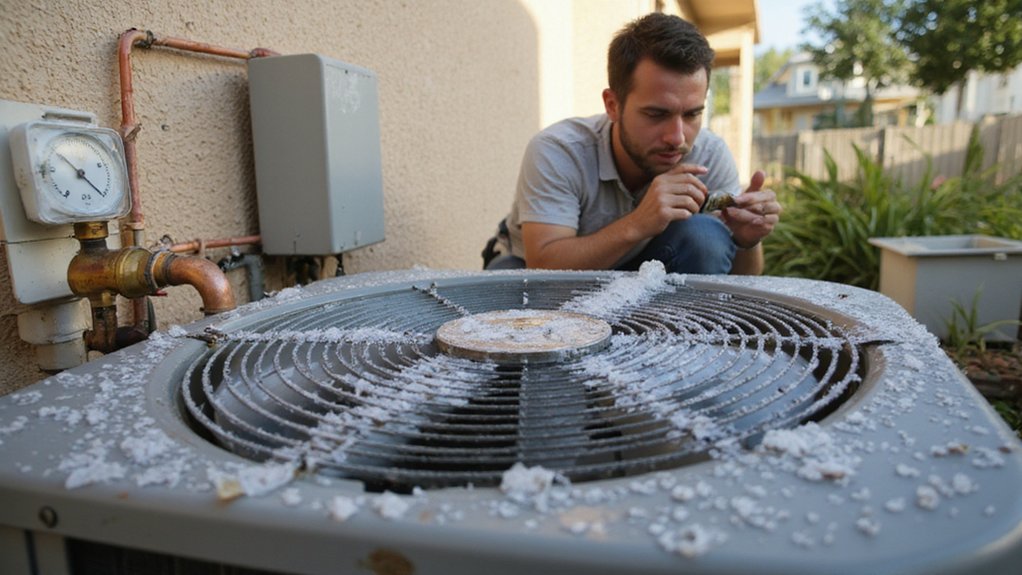
Low refrigerant usually means the system has lost some of its charge. Air conditioners are designed to circulate refrigerant through a closed system, so a noticeable drop should not simply be treated as normal use.
Refrigerant leaks are one of the most common reasons for a low level. A leak can develop at a connection point, fitting, coil, or another part of the refrigerant circuit.
Some leaks are small and develop slowly. In that situation, the AC may continue working for some time before the symptoms become obvious. Cooling may gradually get worse, and the system may begin running for longer periods.
Installation problems can also contribute to refrigerant issues. If a system was not installed or serviced correctly, it may not have the correct charge or could develop problems around connections.
Regular AC inspections can help spot signs of leaks and other problems before they become harder to address. If you notice reduced cooling or ice around the coil, don’t assume that adding refrigerant is the only step needed.
The source of the refrigerant loss needs to be identified. Otherwise, the same problem can return after the system is recharged.
Checking Your Air Conditioner’s Refrigerant Levels
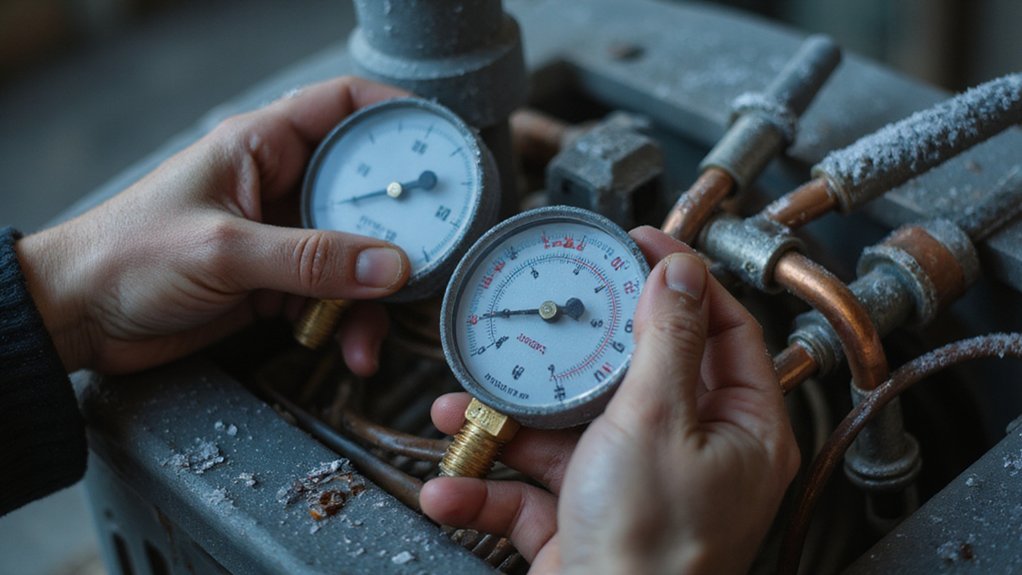
So, how can you tell whether your air conditioner is actually low on refrigerant?
One way is to check system pressure with the appropriate gauge and compare the reading with the manufacturer’s specifications. Refrigerant systems can have different pressure requirements, so there is no single pressure number that applies to every AC.
Pressure readings also need to be interpreted in context. Outdoor temperature, indoor conditions, the refrigerant type, and the operating state of the system can all affect the reading.
You may also look for visible signs of a possible leak. Oily residue around fittings, connections, or coils can sometimes indicate that refrigerant and oil have escaped from the system.
Keep in mind that not every leak will leave an obvious mark. Some leaks are difficult to locate and may require professional testing.
Low refrigerant can affect cooling and may place extra strain on certain components. If you suspect the refrigerant charge is low, a qualified technician can test the system, locate the source of the problem, and determine what repair is needed.
Steps to Take If Your AC Is Low on Refrigerant
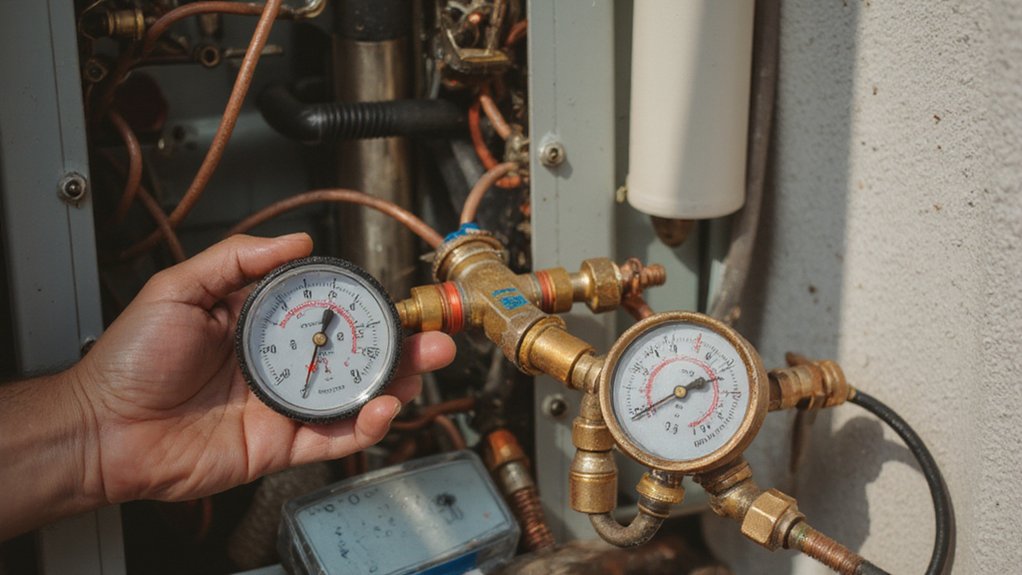
If your air conditioner appears to be low on refrigerant, the next step should be finding out why.
A pressure check can help determine whether the system is operating within the expected range. A technician may use gauges and other equipment to assess the refrigerant circuit.
The system should also be checked for leaks. Look around accessible fittings and connections for oily residue or other signs of a problem. A visual inspection may not find every leak, so additional testing may be needed.
If a leak is found, it should be repaired before the system is recharged. Simply adding more refrigerant may only provide temporary relief if the leak remains.
The correct refrigerant type and charge amount also matter. Different air conditioners use different refrigerants, and the system should be charged according to the manufacturer’s specifications.
If you’re not trained to work with refrigeration equipment, this is a job best left to a qualified technician. Refrigerant systems operate under pressure and require the right tools and procedures.
Once the underlying problem has been addressed, the technician can recharge the system as needed and check whether the AC is cooling properly again.
When to Call a Professional for AC Refrigerant Issues
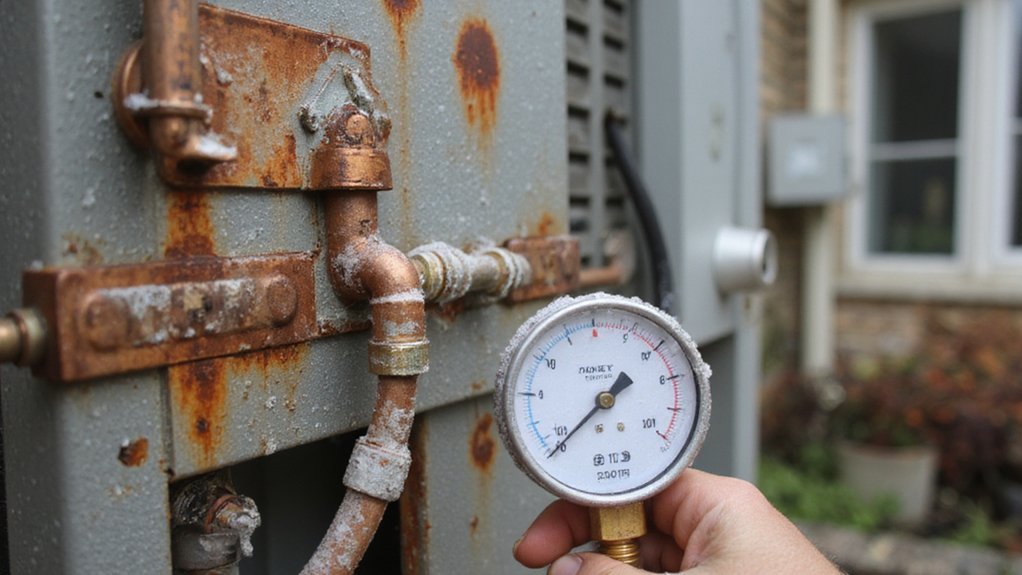
Some AC problems can be handled with simple homeowner checks, such as inspecting or replacing a dirty air filter. Suspected refrigerant problems are different.
If your AC is running but not cooling properly, and you’ve already ruled out a dirty filter or obvious airflow problem, it may be time to have the system inspected. If the issue involves a heat pump, professional heat pump repair may also be needed.
Ice forming on the evaporator coil is another reason to arrange a professional inspection. The cause could be low refrigerant, restricted airflow, or another issue, so proper testing is needed.
Hissing or bubbling sounds around the refrigerant lines can also point to a leak. A technician can use the appropriate tools to check for leaks and assess the condition of the system.
Professional service is especially useful when refrigerant needs to be recovered, repaired, or recharged. A qualified technician can inspect the system, repair a leak when one is found, and check that the AC is operating correctly afterward.
Getting the issue checked early can also help prevent a small refrigerant problem from turning into a larger AC repair.
Can You Refill Refrigerant in Your AC Yourself?
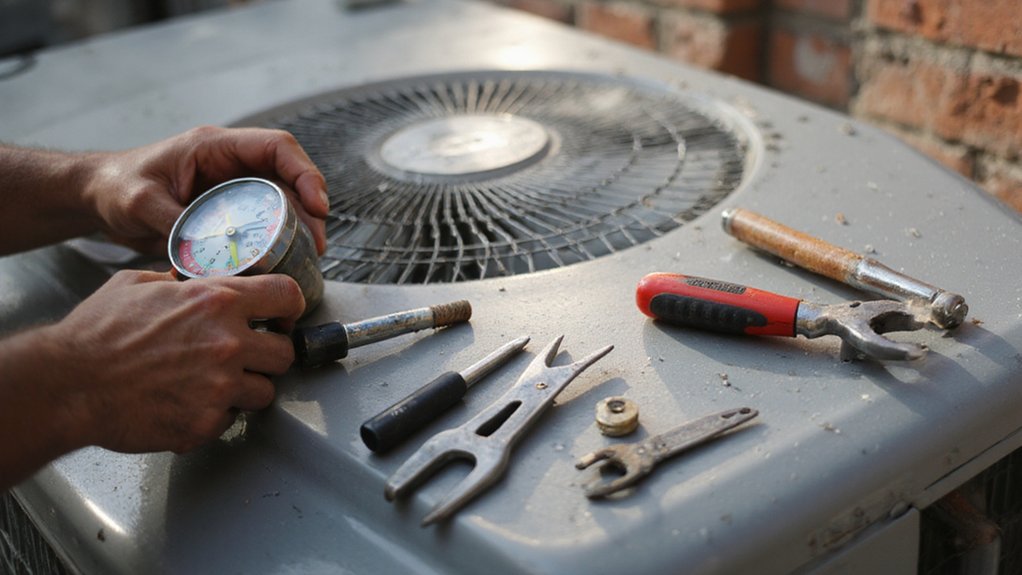
It may be tempting to treat a low refrigerant level as a simple refill job. In reality, refrigerant service involves more than adding refrigerant to the system.
You need to know which refrigerant the air conditioner uses and how much it should contain. The wrong refrigerant or an incorrect charge can cause problems with system operation.
Working with refrigerant also requires the right equipment and safe handling procedures. Refrigerant is stored under pressure, and improper handling can create safety and environmental concerns.
There’s another issue to consider. If the refrigerant level is low because of a leak, adding more refrigerant does not fix the source of the problem.
A technician can check the system for leaks, determine whether repairs are needed, and recharge it according to the manufacturer’s specifications.
For most homeowners, professional service is the safer option when the problem involves the refrigerant circuit. Simple maintenance tasks, such as changing the air filter, are much more suitable for routine DIY care.
Preventing Low Refrigerant Levels in the Future

Preventing refrigerant loss starts with paying attention to how your air conditioner performs.
Regular AC inspections can help identify damaged connections, worn components, or signs of leakage. You don’t need to open the refrigerant circuit yourself to keep an eye on the system.
Check the air filter regularly and replace it when necessary. Good airflow can help the AC operate properly and may reduce the chance of problems caused by restricted airflow.
It’s also worth paying attention to changes in cooling performance. If the system suddenly takes much longer to cool your home, runs for unusually long periods, or begins producing ice around the coil, don’t ignore the change.
Unusual hissing or bubbling sounds can also be worth checking. They may point to a refrigerant leak or another issue that needs attention.
Regular AC service can give a technician an opportunity to inspect the system and catch developing problems. If an older system needs replacement, heat pump installation may be another option to discuss with a qualified technician.
Taking care of small issues early can help keep your air conditioner working properly through the cooling season.
Frequently Asked Questions
How Often Should I Check My AC’s Refrigerant Levels?
You generally don’t need to check the refrigerant level on a fixed schedule if your air conditioner is working normally. Refrigerant is part of a closed system, so it should not normally need regular topping up.
If your AC is showing signs such as poor cooling, ice buildup, or unusual sounds, it may need an inspection. A technician can check the system and determine whether the refrigerant charge is within the manufacturer’s specifications.
Regular AC service can also help identify leaks or other problems before they become more serious.
Can Low Refrigerant Levels Cause My Energy Bill to Increase?
Yes. Low refrigerant can make an air conditioner work longer to cool the home. When the system struggles to reach the thermostat setting, it may run for extended periods.
Longer runtime can increase electricity use, which may show up as a higher energy bill.
Keep in mind that higher energy use isn’t always caused by refrigerant. Dirty filters, airflow restrictions, thermostat issues, and other AC problems can produce similar symptoms.
What Types of Refrigerant Are Used in Air Conditioners?
Air conditioners can use different refrigerants depending on the age, design, and model of the system.
R-410A has been widely used in many residential systems, while older equipment may use R-22. The refrigerant type should always be confirmed from the equipment label or manufacturer’s information.
You should not assume that one refrigerant can be substituted for another. The system needs the refrigerant specified for that particular equipment.
Is Low Refrigerant Harmful to My Air Conditioner?
Low refrigerant can affect how an air conditioner operates. It may reduce cooling performance and cause the system to run for longer periods.
In some situations, low refrigerant can also contribute to the evaporator coil freezing. Continued operation under abnormal conditions may place additional strain on the system.
If you suspect a low refrigerant level, having the AC checked can help identify the cause and prevent the problem from continuing.
Can Weather Conditions Affect Refrigerant Levels in My AC?
Weather can affect how an air conditioner operates and can influence system pressure readings. Very hot outdoor temperatures can also place more demand on the AC.
Weather itself does not normally cause refrigerant to disappear from a properly sealed system. If refrigerant is actually being lost, a leak or another system problem should be considered.
If your AC performance changes during periods of extreme heat, check simple issues such as airflow and filters as well. If the problem continues, a professional inspection can help identify the cause.
Conclusion
Knowing the signs of low refrigerant can help you spot an AC problem before it becomes more difficult to address. Warm air from the vents, ice around the evaporator coil, longer cooling cycles, and unusual hissing sounds can all be reasons to investigate further.
Low refrigerant is often linked to a leak, so simply adding more refrigerant may not solve the problem for long. The source of the refrigerant loss needs to be identified and repaired.
You can handle simple checks, such as inspecting the air filter and paying attention to airflow. When the problem involves refrigerant pressure, leaks, or recharging the system, professional service is the safer choice.
Regular AC care and attention to changes in cooling performance can help you catch problems earlier and keep your system working properly throughout the cooling season.
Change Notes
- Kept the original blog title exactly as provided.
- Kept all JPG text and file paths exactly as provided.
- Added no images.
- Removed repetitive wording and stiff phrasing.
- Reworked sentence structure for a more natural reading rhythm.
- Kept the original topic, section order, and main points.
- Reduced repeated references to the same symptoms.
- Made the refrigerant troubleshooting sections clearer and more practical.
- Kept the tone informational and homeowner-friendly.
- Expanded thin sections so the article reads as a complete blog rather than a series of short AI-generated paragraphs.