

If your air conditioner leaks water inside your home, don’t ignore it. Even a small leak can damage floors, walls, ceilings, or nearby furniture if it continues. Start by turning off the unit to stop the water flow. Then check the area around the AC for visible moisture, standing water, or other signs of a problem.
A clogged drain line, dirty air filter, damaged drain pan, or condensate pump issue can all cause water to collect where it shouldn’t. Some problems are easy to fix, while others need a professional HVAC technician.
Key Takeaways
- Turn off the air conditioner as soon as you notice water leaking inside.
- Check the drain pan and condensate drain line for visible clogs or debris.
- Clean or replace a dirty air filter to improve airflow.
- Look at the condensate pump if your system uses one.
- Call an HVAC professional if the leak continues or you see major water damage.
What to Do If You Spot a Leak?
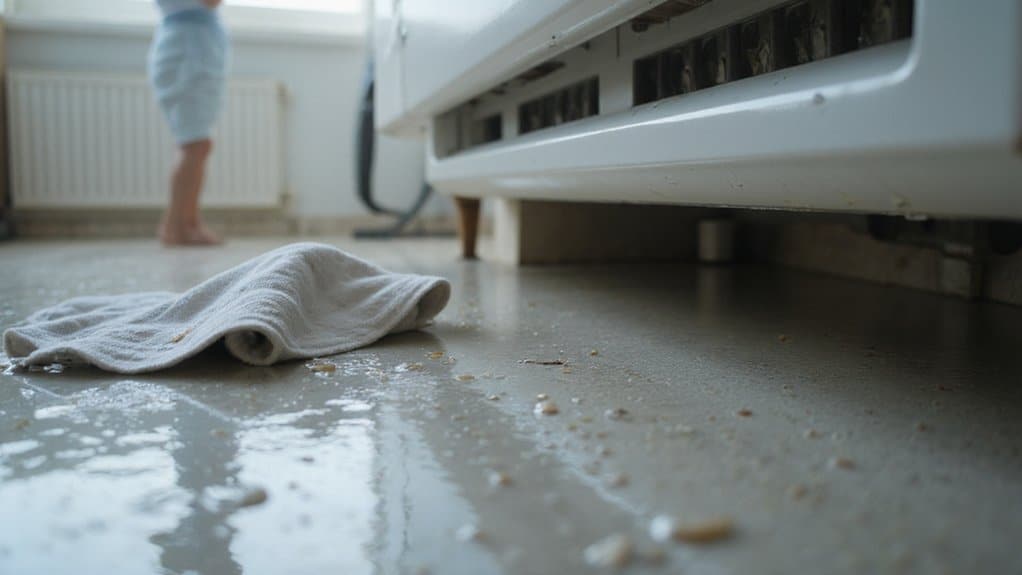
If you notice water coming from your air conditioner, start by turning the system off. Letting the AC continue to run can send more water into the area and make the damage worse.
Take a look around the indoor unit. Check for puddles, damp spots, water stains, or debris. The drain pan and condensate drain line are good places to inspect because a blockage can stop water from draining away properly.
If you have a wet/dry vacuum, you may be able to clear a clogged condensate line. Avoid forcing tools into the system if you aren’t sure how the drain is set up.
It’s also worth checking the air filter. A dirty filter can restrict airflow and contribute to ice forming on the evaporator coil. When that ice melts, the extra water can end up around the indoor unit.
If the leak doesn’t stop after these checks, contact a professional HVAC technician. A technician can find the source of the leak and determine whether a drain, coil, refrigerant, or other component needs attention.
Common Causes of AC Leaks
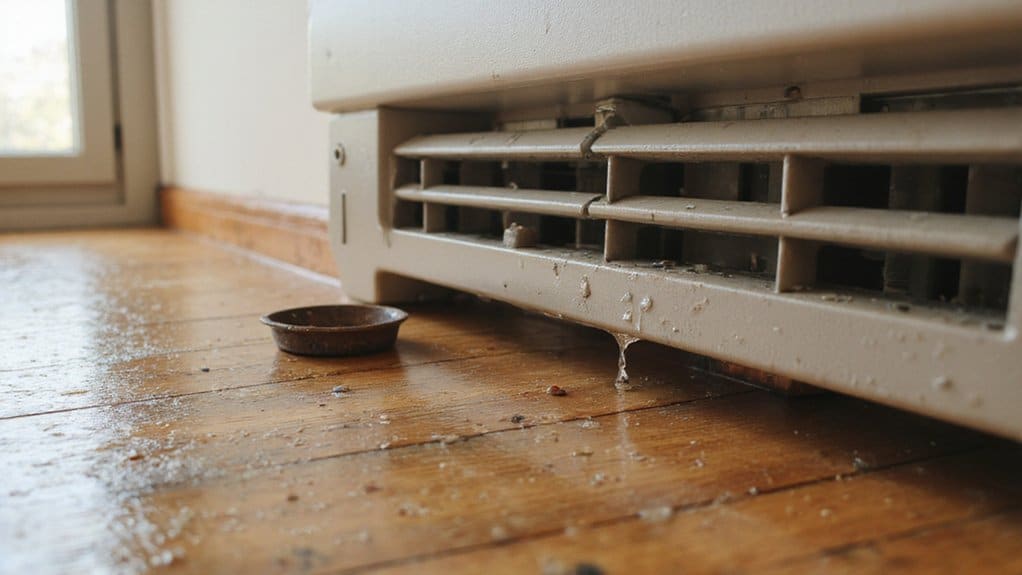
There are several reasons an air conditioner may leak water inside your home. Some are fairly simple, while others can point to a larger system problem.
High humidity can produce a large amount of condensation. Your AC normally removes moisture from indoor air, but drainage problems can cause that water to collect around the unit.
A clogged drain line is another common cause. Dirt, algae, dust, and other debris can build up inside the line and stop condensate from flowing away. When the water has nowhere to go, it may overflow from the drain pan.
Refrigerant problems can also lead to water around an indoor AC unit. When refrigerant levels are low, the evaporator coil can become too cold and freeze. Once the ice melts, the resulting water may overflow the system’s normal drainage path.
Poor installation or missed maintenance can create other problems. A drain pan may not sit correctly, a drain line may not have the right slope, or other components may not work as they should.
Identifying the Source of Your AC Leak
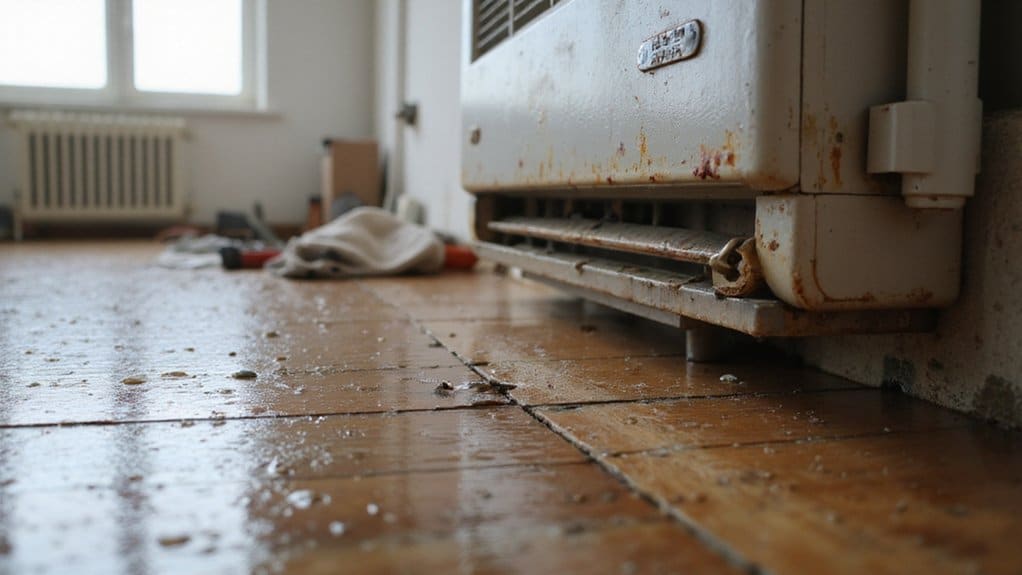
Finding the source of an AC leak isn’t always straightforward. Water can travel from one area of the system before it finally becomes visible, so start with the easiest areas to inspect.
Look around the indoor unit for puddles, damp surfaces, stains, or signs of dripping. Pay attention to the drain pan, condensate line, fittings, and nearby ducts.
Then check the surrounding walls and ceiling. Water stains or damp patches may show that the leak has been happening for longer than you realized.
The air filter is another useful place to look. If it’s covered in dust, restricted airflow may be contributing to ice buildup on the coil. A frozen coil can release a large amount of water once the ice melts.
Next, inspect the condensate drain line for visible blockages. If the line looks clear but water is still leaking, the problem may be inside the unit or related to another component.
Low refrigerant can also cause the evaporator coil to freeze. Because refrigerant work requires the right equipment and knowledge, this isn’t a repair you should attempt yourself.
Quick Fixes You Can Do for Minor AC Leaks
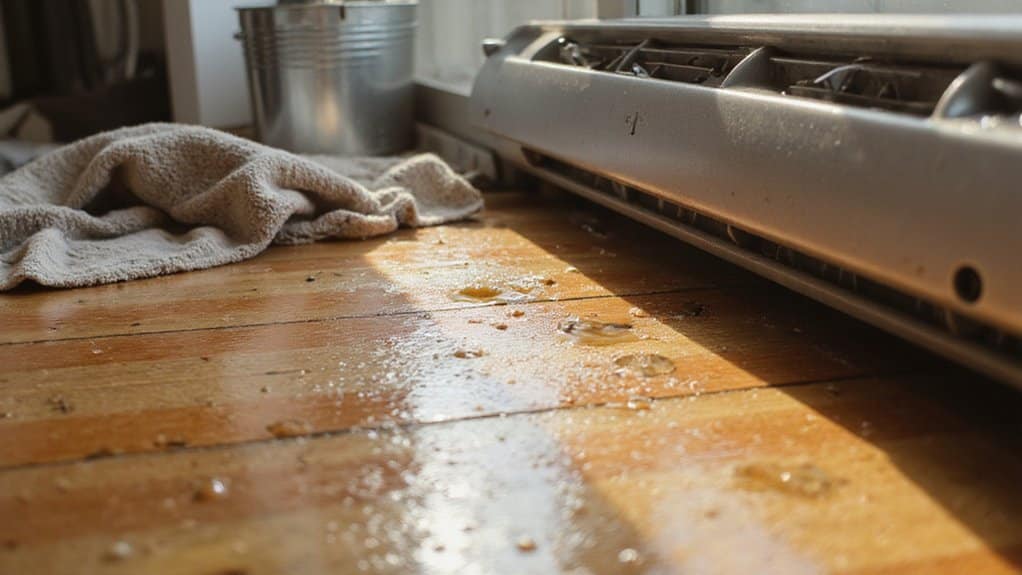
Some minor AC leaks may have a simple cause. Before calling for service, you can safely check a few areas if you’re comfortable doing so.
Start with the drainage system. Look for visible blockages around the condensate drain line and drain pan.
Next, inspect the air filter. If it’s dirty, clean or replace it according to the manufacturer’s instructions.
If your system has a condensate pump, check it for obvious blockages or signs that it isn’t operating properly.
If you’re not comfortable working around the equipment, leave the system off and have a professional inspect it.
Check Drainage System
The condensate drain line carries water away from your air conditioner. When the line becomes clogged, water can back up and overflow into your home.
Look for visible debris or signs of standing water around the drain. If you have a wet/dry vacuum, it may help clear a blockage from the line.
A plumber’s snake may also be used in some situations, but be careful. Pushing a tool too far can damage the line or other parts of the system.
Check the drain pan as well. Cracks, rust, or other damage can allow water to escape even when the drain line is clear.
The drain line also needs to be positioned so water can flow away from the unit. If you’re unsure whether it’s installed correctly, a technician can check it for you.
Clean Air Filter
A dirty air filter can reduce airflow through your air conditioner. When airflow is restricted, the evaporator coil may become too cold and freeze.
Check the filter regularly, especially during periods when you’re using the AC often. If you can see a layer of dust and debris covering the filter, clean or replace it based on the manufacturer’s instructions.
Keeping the filter clean also helps maintain indoor air quality and allows air to move through the system more freely.
Don’t assume every AC uses the same type of filter. Check the unit’s manual or the information printed on the existing filter before buying a replacement.
Inspect Condensate Pump
If your air conditioner uses a condensate pump, it can be another source of a water leak.
First, turn off the AC before inspecting the area. Look for visible debris, standing water, cracks, or other signs of damage around the pump.
Check the condensate line for blockages as well. A clogged line can stop water from reaching the pump correctly.
If the pump has no power, check whether the circuit breaker has tripped. Don’t work on electrical components if you aren’t comfortable doing so.
A pump that makes unusual sounds, fails to remove water, or shows visible damage may need professional attention. Replacing or repairing it without knowing the cause could leave the leak unresolved.
When to Call a Professional for Help?
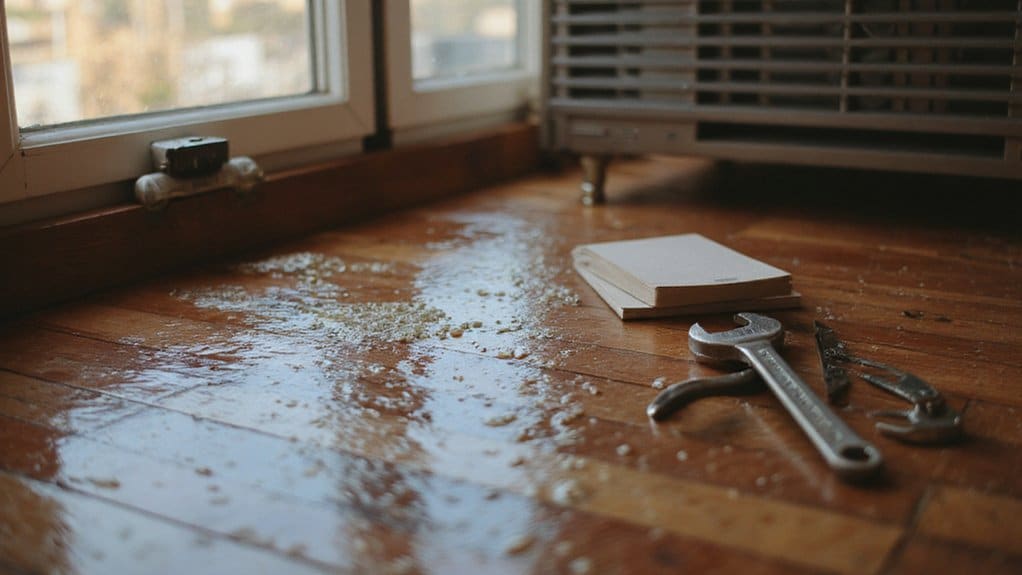
If you’ve checked the filter and drainage system but water continues to leak, it’s time to call an HVAC professional who can also help with heat pump repair when needed.
Some causes aren’t easy to identify from the outside. Refrigerant problems, frozen coils, damaged components, poor drainage, and installation issues may require specialized tools and training.
You should also get professional help if you see significant water damage around the unit. Wet ceilings, walls, flooring, or electrical components can create problems beyond the AC itself.
Unusual noises, repeated leaks, or a system that stops cooling properly are also good reasons to have the unit inspected.
If you’re unsure about a repair, don’t take apart the system just to find the source. Leaving the AC turned off until it can be inspected is usually the safer choice.
How to Prevent Future Leaks
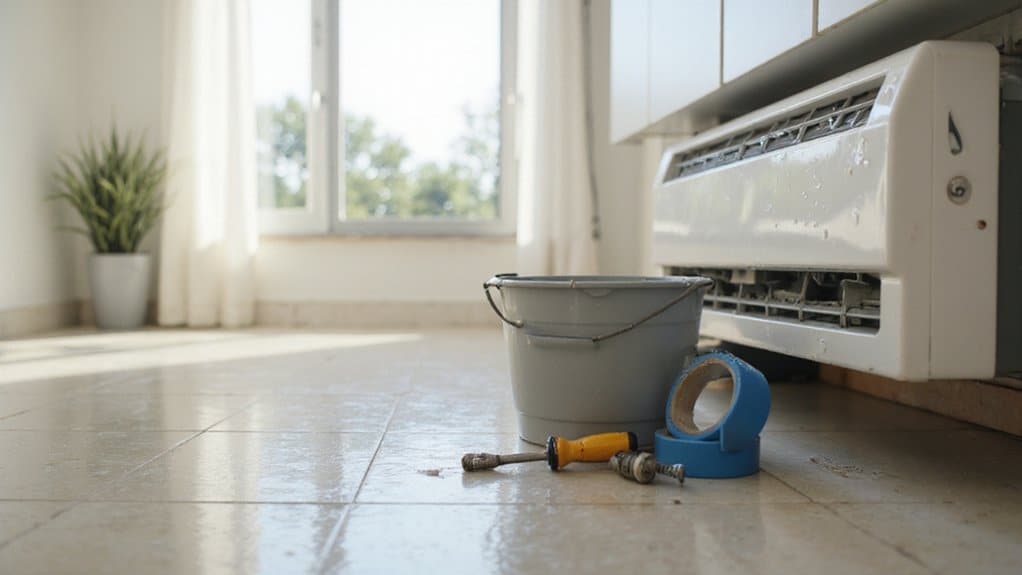
Regular care can help reduce the chance of another AC leak. Start with the air filter and check it regularly. Replace or clean it when needed so dust doesn’t build up and restrict airflow.
Keep an eye on the condensate drain line, too. If you notice slow drainage, standing water, or repeated moisture around the indoor unit, don’t wait for a larger leak to develop.
During humid weather, a dehumidifier may help manage excess moisture in the home. The right approach depends on your home’s conditions and the type of AC system you have.
Insulation can also affect condensation. Poorly insulated areas may become cold enough for moisture to collect on surfaces. If you repeatedly notice condensation around ducts or other parts of the system, have the area inspected.
Refrigerant levels should be checked by a qualified technician. Low refrigerant isn’t something you should try to correct yourself.
The Importance of Regular AC Maintenance
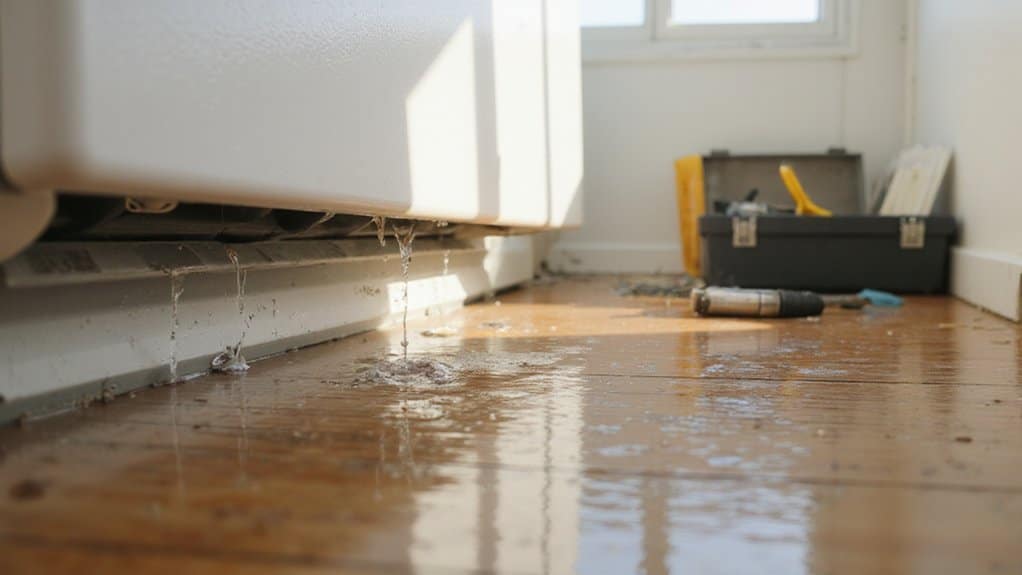
Routine AC maintenance can help catch small problems before they turn into leaks or water damage. During a service visit, a technician can check the filter, coils, drain pan, condensate drain, and other parts of the system.
Keeping these components clean helps the AC remove moisture and cool your home as expected. Regular service can also reveal issues such as a blocked drain, frozen coil, refrigerant problem, or electrical fault. If an older system needs replacing, heat pump installs may be another option to discuss with an HVAC professional.
You can handle some simple maintenance yourself, such as checking the air filter and keeping the area around the indoor unit clear. Other work should be left to a trained HVAC technician.
If your AC has leaked more than once, don’t treat each leak as an isolated issue. Repeated leaks usually deserve a closer look to find the underlying cause.
Frequently Asked Questions
Can I Use My Air Conditioner if It’s Leaking Water?
It’s best to turn off the air conditioner when you notice an indoor water leak. Continuing to run it can add more water to the affected area and increase the chance of property damage.
Check the filter and visible drainage components if you’re comfortable doing so. If the leak continues, have an HVAC professional inspect the system before using it again.
How Can I Tell if the Leak Is Serious?
Look at how much water is present and where it’s going. A small amount of moisture near the unit is different from water dripping through a ceiling or spreading across the floor.
Water stains, soaked drywall, standing water, repeated leaks, unusual noises, or a frozen coil all deserve attention. If water is reaching electrical components, keep the system off and seek professional help.
Will a Water Leak Damage My Home?
Yes. An ongoing AC leak can damage flooring, walls, ceilings, insulation, and nearby furniture. Persistent moisture can also create conditions where mold may grow.
The longer the water sits, the greater the chance of damage. Turn off the system, clean up accessible water, and address the source of the leak as soon as possible.
Can I Fix the Leak Myself Without Experience?
You can handle a few simple checks, such as looking at the air filter or checking for visible debris around the drain pan. Clearing an accessible drain blockage may also be possible if you have the right equipment and know how to use it.
Repairs involving refrigerant, electrical parts, internal components, or damaged equipment should be handled by a qualified HVAC professional.
What Are the Signs of a Clogged Drain Line?
Common signs include water pooling near the indoor unit, slow drainage, repeated leaks, damp areas, and musty smells.
If the drain line is clogged, water may back up into the drain pan instead of leaving the system. Clearing the blockage can solve the problem when the drain is the only issue. If the leak returns, the system should be inspected.
Conclusion
If your air conditioner leaks water inside your home, turn it off and check the areas you can safely inspect. Look at the drain pan, condensate drain line, air filter, and condensate pump if your system has one.
A small blockage or dirty filter may be easy to address, but not every leak has a simple cause. Refrigerant problems, damaged parts, repeated leaks, and major water damage need professional attention.
Regular filter changes, drain checks, and routine AC service can help reduce the chance of future leaks and keep your system working as it should.